
Living with chronic pain is an exhausting exercise in detective work. One day a flare-up strikes out of nowhere; the next, a storm front moves in, or a hidden food sensitivity manifests, and the pain cycle resets. Trying to map out these complex correlations mentally is an impossible task, especially when brain fog sets in.
When we tested the leading tracking applications on the road and through daily routines in 2026, we avoided rigid, institutional medical portals. Instead, we hunted for highly adaptive, non-medical consumer tools designed strictly to help users log daily biometric trends, environmental factors, and pain fluctuations. The goal was to find out which apps excel at translating raw, messy daily inputs into scannable, actionable data trends you can actually use to reclaim control over your environment.
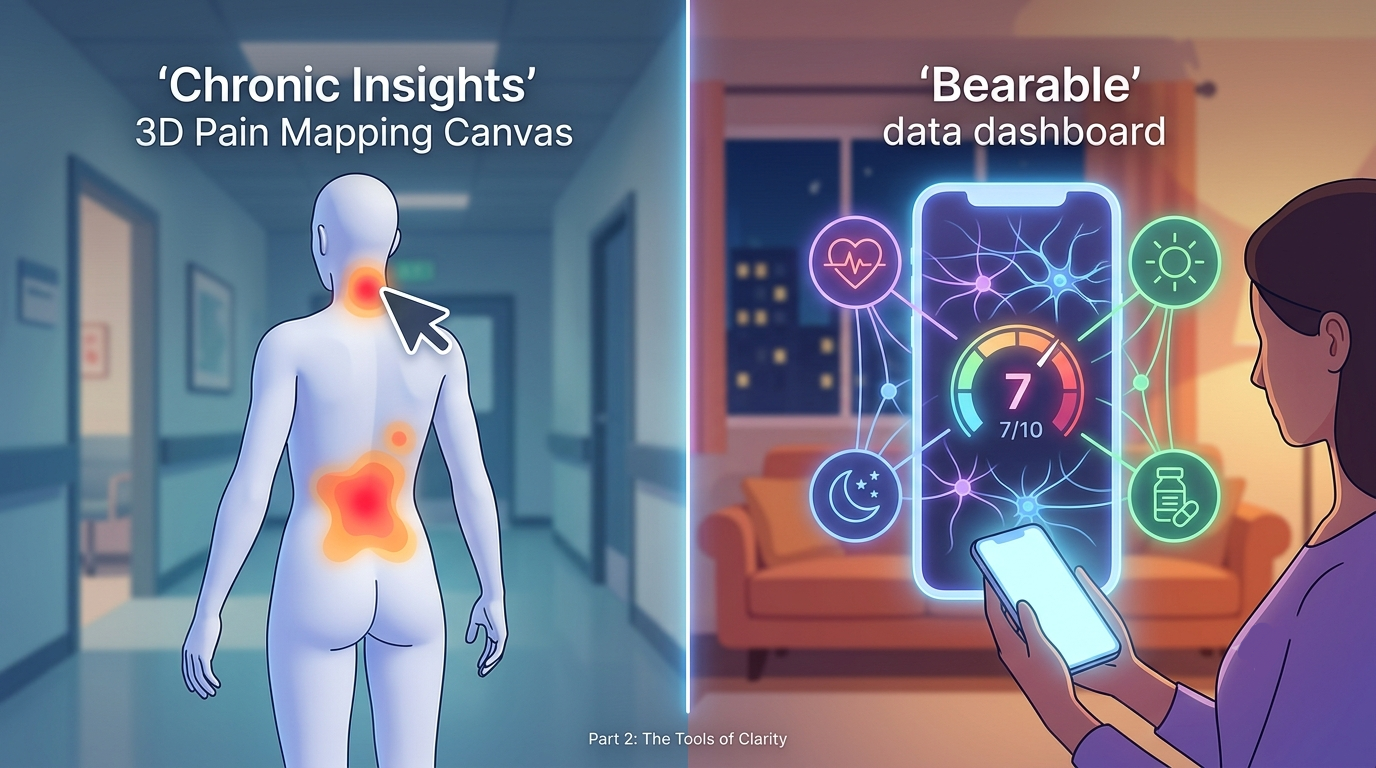
Bearable is a powerhouse for individuals dealing with multi-symptom conditions like fibromyalgia, long COVID, or complex autoimmune issues. The core feature that genuinely works is its Symptom & Factor Correlation Engine. Instead of just letting you log that your nerve pain is at a "7," Bearable allows you to rapidly check off daily variables—ranging from weather changes and sleep quality to social media consumption and precise supplement timings.
When we tested this over a multi-week period, the app automatically cross-referenced these daily habits against pain scores, revealing patterns we completely missed, such as a distinct spike in joint inflammation exactly 24 hours after a night of poor REM sleep.
Pros:
Unrivaled customization; you can create highly specific factor tags unique to your daily routine.
Blends seamlessly with Apple Health and Google Fit to auto-populate heart rate, step count, and sleep cycles.
Includes a dedicated "Experiments" mode to track whether a new lifestyle change (e.g., cutting out dairy or taking a specific non-medical supplement) is actually lowering your pain baseline over time.
Cons:
The free tier strictly locks down your historical data visibility; full data history beyond 30 days requires a premium subscription ($6.99/month or $34.99/year).
The absolute mountain of trackable metrics can feel incredibly overwhelming and trigger tracking anxiety during severe flare-up days.
Available on Android (with select iOS cross-compatibility tools)
Created by a disabled indie developer living with an autoimmune condition, Chronic Insights approaches pain logging with an empathetic, privacy-first design philosophy. The core feature that stands head and shoulders above mainstream trackers is its 3D Pain Mapping Canvas.
Instead of typing out text descriptions, the app presents an interactive, rotatable 3D human model. You literally "paint" your pain directly onto joints, muscles, or bone structures using varying color intensities to denote severity. Over time, the app animates these entries into a visual heatmap timeline, showing exactly how an ache travels from the lower back up to the neck over a three-day cycle.
Pros:
Strictly ad-free and privacy-focused; your health data stays encrypted and is never sold to third-party brokers.
The 3D heatmap offers an instantly scannable visual log that completely removes the friction of trying to describe complex physical pain types in writing.
Generous free tier that includes unlimited symptom, medication, and vital tracking alongside local cloud backups.
Cons:
The 3D pain-painting feature and automated 1-year weather correlation tool are gated behind a $20/year premium upgrade.
The user interface features a noticeable learning curve and lacks the sleek, modern commercial polish of its larger venture-backed competitors.
Manage My Pain is built for the rapid, low-friction entry required when you are in too much discomfort to stare at a screen. The core feature that hits the mark is its 60-Second Daily Reflection Flow.
Rather than dragging you through endless nested menus, it uses a highly optimized, single-screen questionnaire to log pain characteristics (stabbing, throbbing, dull), location, and current functional limitations in less than a minute. When we tested this during active, high-stress periods, the quick-log design ensured we actually maintained our tracking streak instead of abandoning the app due to input fatigue.
Pros:
Incredibly streamlined entry system that minimizes the cognitive load required to record a flare-up.
Generates clean, professionally formatted PDF summaries designed to help you quickly explain your monthly trend baselines to others.
Completely free of third-party advertisements across all tiers.
Cons:
Advanced analytics sections and historical reports spanning further back than 30 days require utilizing earned credits or upgrading to a monthly pro tier.
The visual design leans heavily into a clinical, utilitarian aesthetic that lacks the warm, holistic lifestyle feel found in modern wellness apps.
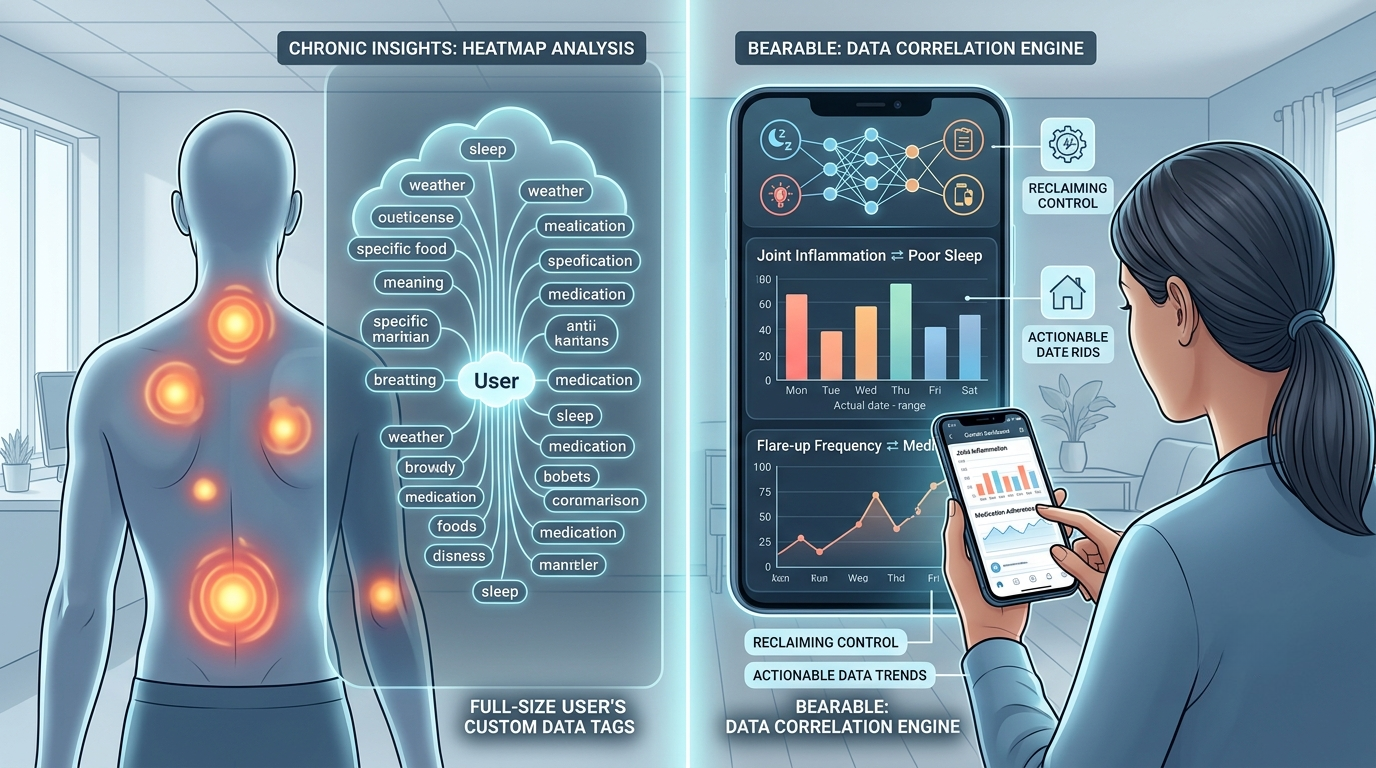
For someone trying to crack the code of an elusive chronic condition, Bearable stands out as the most capable non-medical tracking tool on the market in 2026.
While Manage My Pain is undeniably faster for quick logging, it lacks the deep, automated cross-referencing capabilities required to uncover hidden environmental catalysts. Bearable’s ability to pull in automatic biometric data from your phone's background sensors and map it directly against your custom lifestyle tags takes the guesswork out of the equation. If you are willing to invest a few minutes a day into its tracking ecosystem, the resulting trend charts provide a level of clarity that paper journals simply cannot match.