
Retirement planning often gets framed as something distant and complicated—full of charts, projections, and financial jargon that can feel intimidating if you’re not already deep in the investing world.
But in reality, retirement planning is less about predicting markets and more about answering a simple question:
Are my current financial habits leading me toward the life I want later?
That shift in mindset is exactly why modern retirement planning apps have become so useful. Instead of forcing users to think like financial analysts, they translate long-term goals into something more practical: daily decisions, monthly habits, and clear visual feedback.
In 2026, the best tools are not necessarily brokerage platforms. They are planning-focused apps that help you connect today’s spending behavior with tomorrow’s financial reality.
We reviewed several widely used apps that focus on retirement readiness, cash flow visibility, and long-term goal tracking. The goal wasn’t to find “perfect investment tools,” but rather systems that make retirement feel structured, understandable, and actionable.
Here are five of the most useful options.
Empower (formerly Personal Capital) is one of the most widely used tools for people who want a complete picture of their financial life in one place.
Once you connect your accounts, the app builds a real-time snapshot of your net worth, spending habits, and long-term financial trajectory. Its most valuable feature is the retirement planning dashboard, which allows you to test different scenarios—such as retiring earlier, saving more each month, or adjusting investment assumptions.

One of the standout elements is its simulation-based forecasting model, which gives you a probabilistic view of retirement readiness rather than a single fixed number. This helps users understand how different decisions might affect long-term outcomes.
Strong overall financial dashboard (net worth + investments + spending)
Scenario-based retirement modeling
Free access to powerful planning tools
Clear long-term financial visualization
Encourages optional wealth management services
Can feel slightly advanced for beginners at first
Users who want a high-level, data-driven view of their entire financial situation.
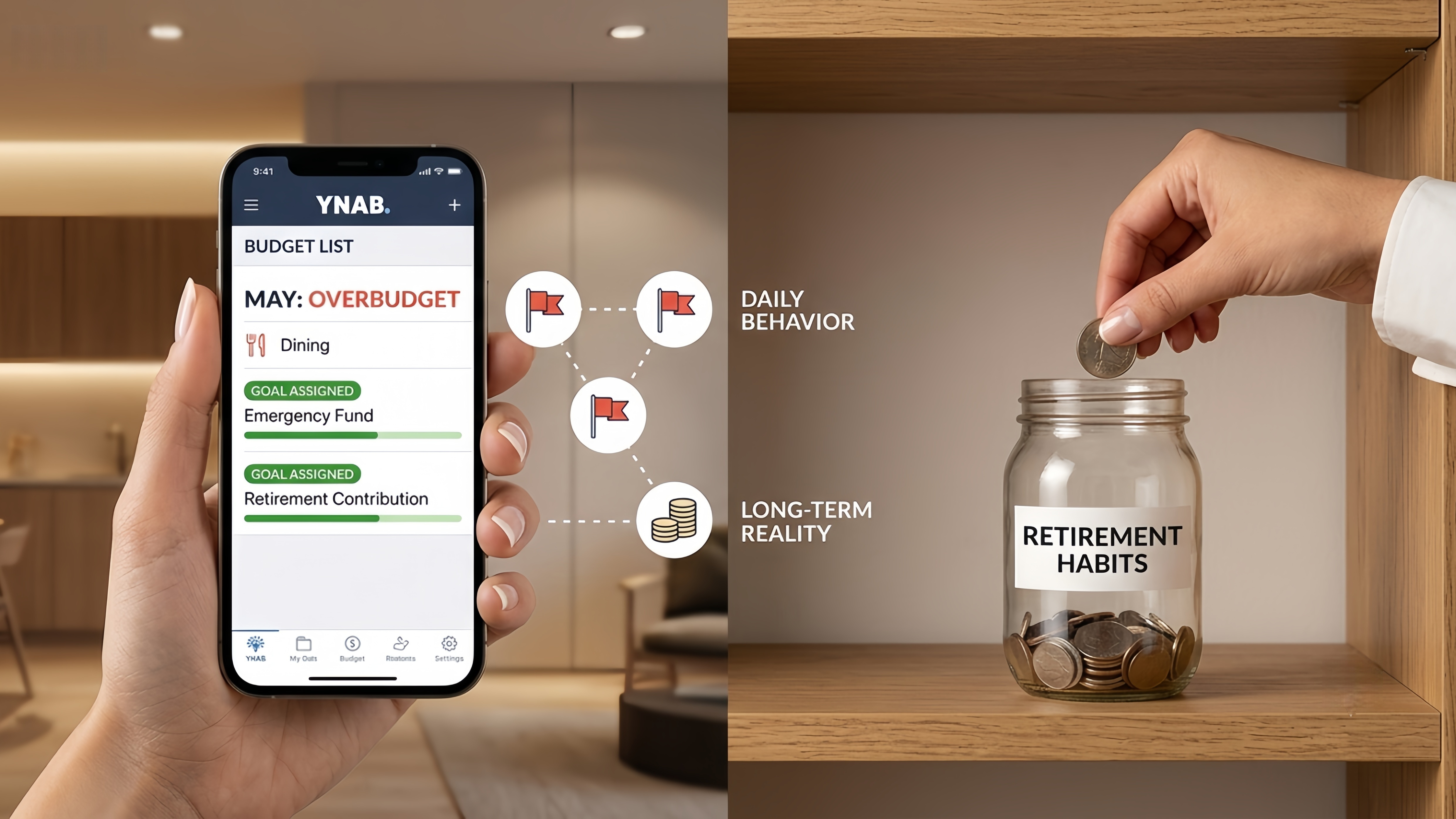
YNAB is not a traditional retirement planning app, but it plays a surprisingly important role in long-term financial success.
Instead of focusing on projections, it focuses on behavior. Every dollar is assigned a purpose, including future goals like retirement contributions. This forces users to treat long-term saving as a real, immediate priority rather than something abstract.
The app’s “goal” and “target” system helps users break large financial objectives into smaller, manageable actions. Over time, this builds the kind of consistency that retirement planning actually depends on.
Strong behavioral approach to money management
Encourages consistent long-term saving habits
Excellent for cash flow discipline
Highly structured system for goal tracking
Requires active, ongoing engagement
Steeper learning curve than most budgeting apps
Users who want to build strong financial habits that support long-term retirement goals.
PocketGuard takes a more simplified approach to financial planning. Instead of deep projections or complex investment modeling, it focuses on one core question:
How much money do I actually have left to spend?
After accounting for bills, recurring expenses, and savings goals, the app shows your “safe-to-spend” balance. This makes it easier to avoid overspending while still keeping long-term goals in mind.
While it doesn’t offer advanced retirement forecasting, it’s useful as a daily guardrail that ensures your financial habits stay aligned with your broader goals.
Extremely simple and easy to understand
Clear view of available spending money
Helps prevent overspending
Quick daily financial check-in tool
Limited long-term forecasting capabilities
Less detailed than full financial planning platforms
Users who want a simple way to stay financially disciplined day to day.
Rocket Money (formerly Truebill) focuses on helping users reduce unnecessary spending and manage recurring subscriptions.
One of its most practical features is subscription tracking. Many users discover forgotten or unused subscriptions that quietly drain money each month. By identifying and canceling these expenses, the app effectively helps free up additional funds that can be redirected toward retirement savings.
It also includes automated savings features, which allow users to set aside small amounts of money over time without thinking about it too much.
Helps identify and cancel unused subscriptions
Simple net worth tracking
Automated savings features
Easy setup and onboarding
Some features require paid subscription
Premium pricing structure can vary
Users who want to uncover hidden money they can redirect toward long-term savings.
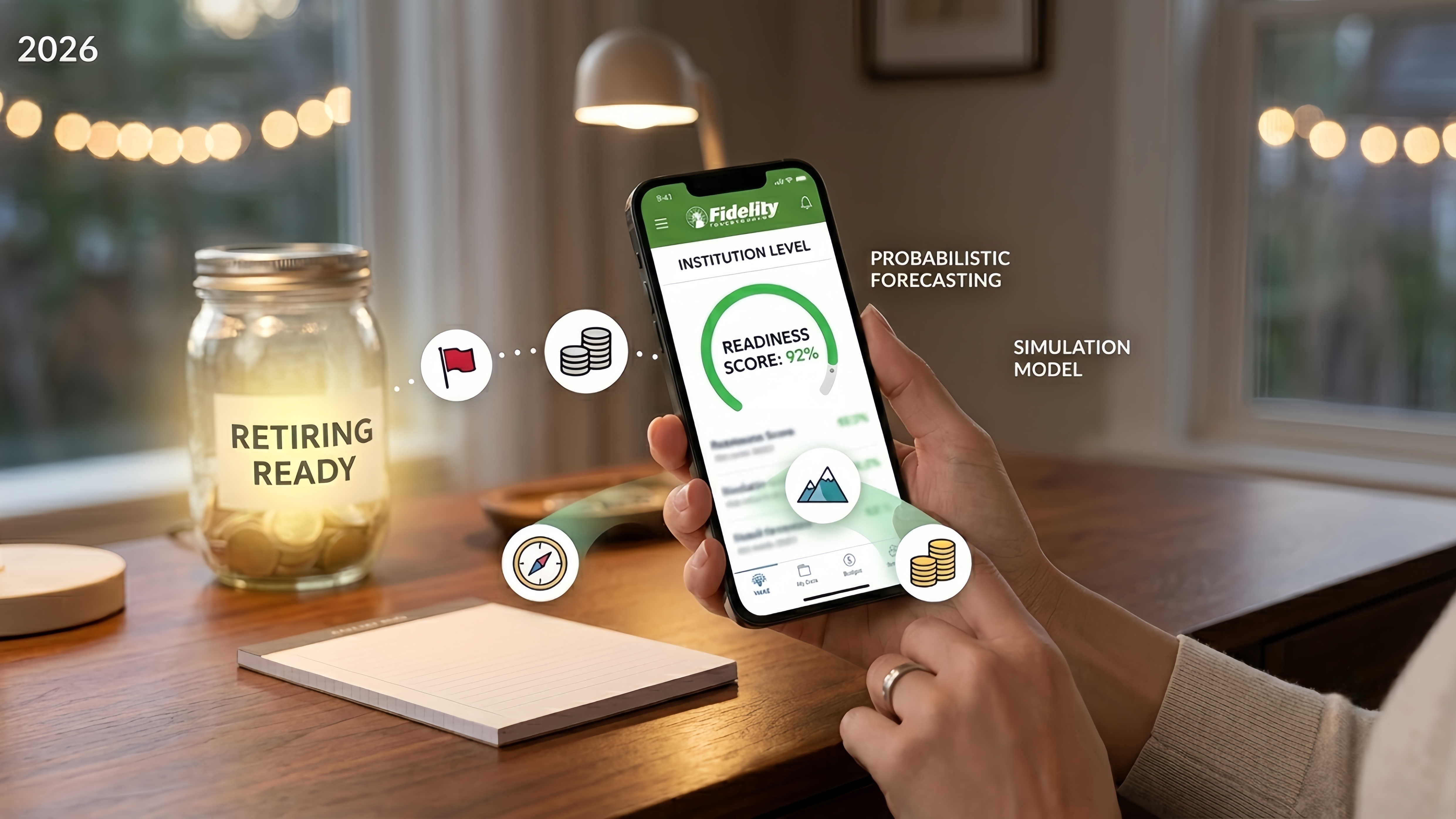
Fidelity is one of the most established financial institutions in the U.S., and its mobile app includes a surprisingly strong retirement planning toolkit.
The Planning & Guidance features allow users to estimate whether they are on track for retirement based on income, savings, and expected future expenses. One of its most useful outputs is a retirement readiness score, which provides a simple snapshot of progress.
Unlike some third-party tools, Fidelity’s projections are grounded in real investment account data, making them particularly useful for users who already have retirement accounts or want institution-level accuracy.
Trusted financial institution
Strong retirement readiness tools
Free access to planning features
Accurate integration with investment accounts
Best experience requires Fidelity accounts
Less flexible than standalone budgeting apps
Users who want a reliable, institution-backed retirement planning experience.
No single app can fully handle retirement planning on its own. Instead, these tools work best as a system:
Empower → Understand your full financial picture
YNAB → Build strong saving habits
PocketGuard → Control daily spending decisions
Rocket Money → Eliminate wasted expenses
Fidelity → Track long-term retirement readiness
Together, they cover the full journey from daily money behavior to long-term retirement forecasting.
Retirement planning is often overcomplicated by language and assumptions that it requires financial expertise. In reality, the most important factor is consistency—how you manage your money over time.
What these apps do well is translate long-term goals into something more tangible. Whether it’s seeing your net worth in real time, setting monthly targets, or identifying wasted spending, they all help make retirement feel less abstract and more actionable.
You don’t need to optimize everything at once. Even using one of these tools regularly can help you gain a clearer understanding of whether your current financial path is aligned with the future you want.
In the end, retirement planning isn’t about perfection. It’s about direction—and making sure you’re actually moving the way you intend.