
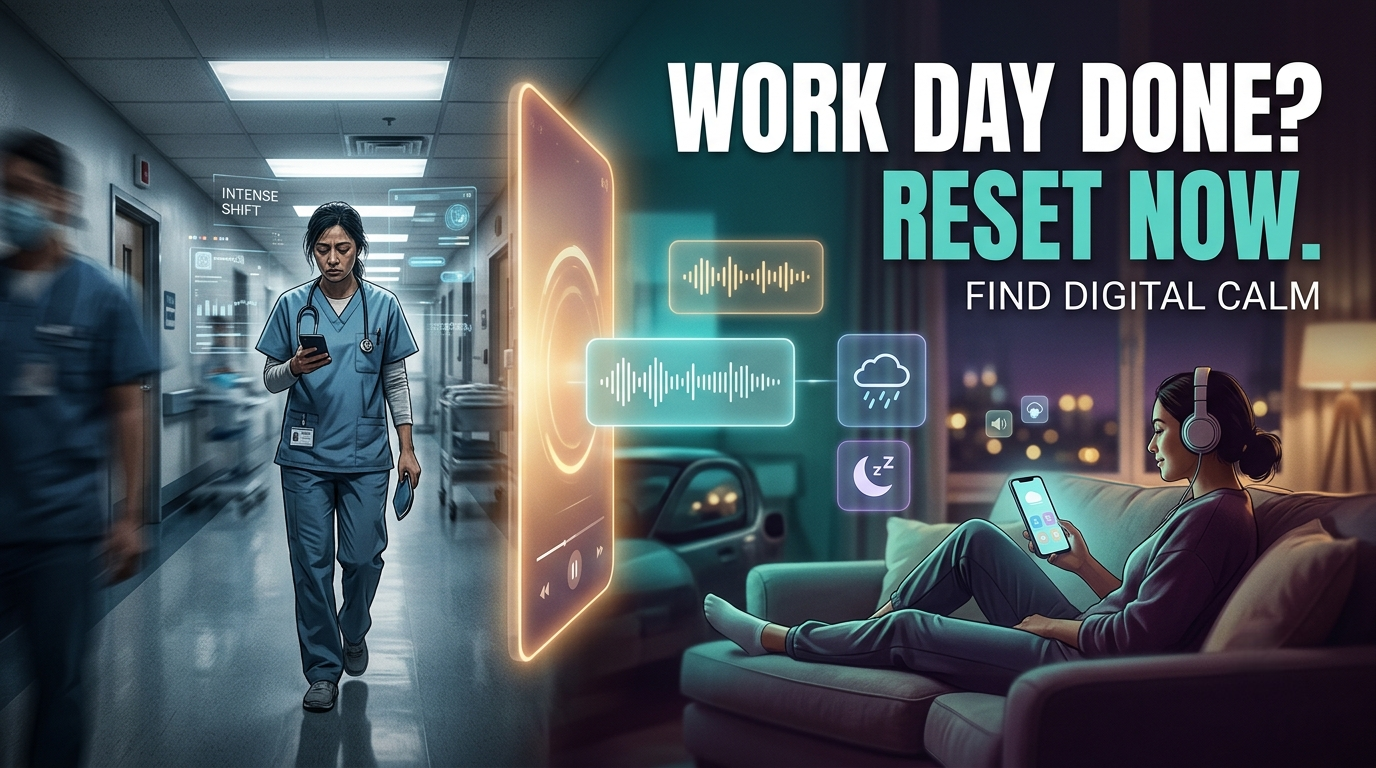
Clocking out after a grueling, high-adrenaline shift leaves the mind stuck in overdrive. For healthcare workers, first responders, corporate crisis managers, and hospitality professionals, the drive home is rarely peaceful. Instead, the brain continues to loop through tasks, patient charts, unread emails, and high-stakes decisions.
When we tested the latest wellness tech on the road after exhausting days in the field, we looked for a specific type of digital intervention: apps designed not just for casual relaxation, but to act as a psychological "buffer zone." The goal isn't to force a hyper-stimulated brain into instant, unrealistic silence, but to actively guide the central nervous system down from a fight-or-flight state into domestic rest.
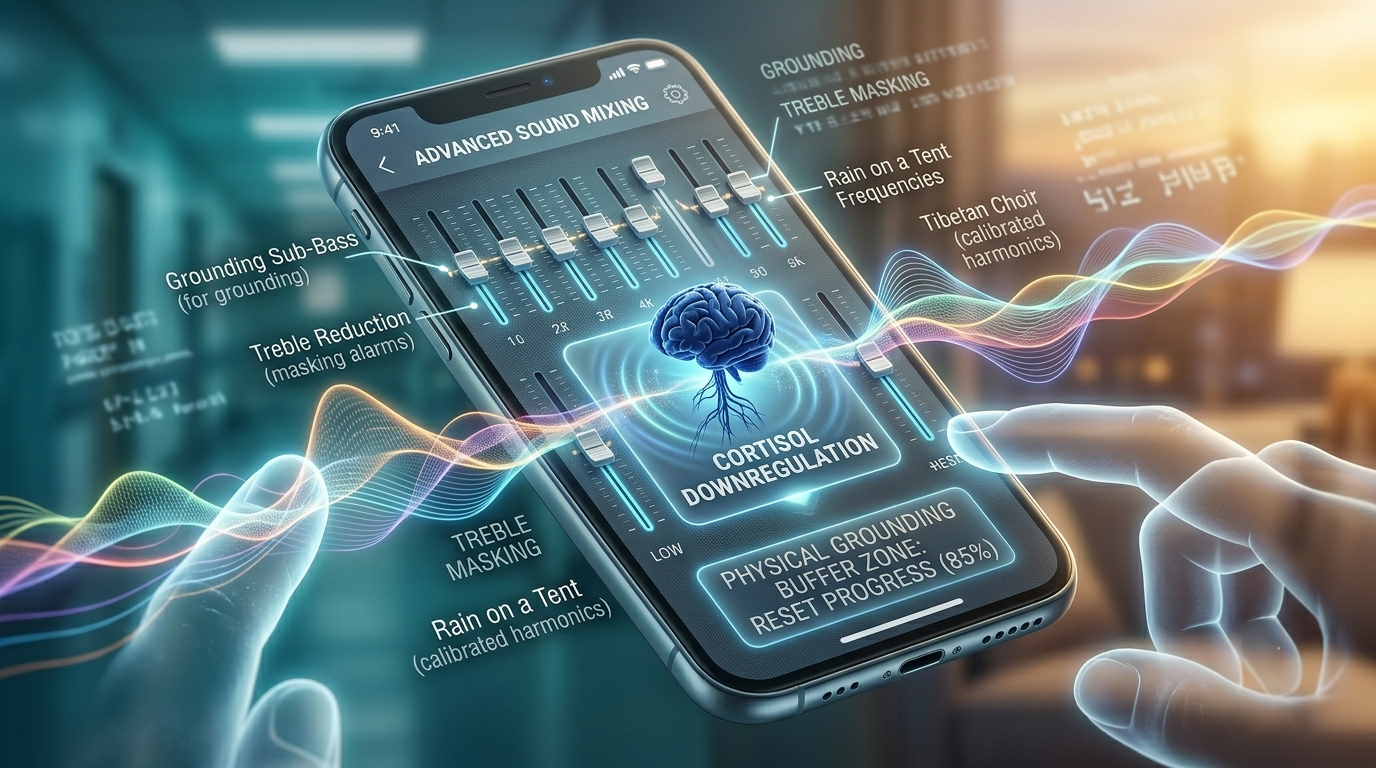
Formerly known as Relax Melodies, BetterSleep excels because it recognizes that a stressed mind hates being told what to do. Rather than forcing users into a rigid, silent meditation when their thoughts are racing, it acts as an interactive sonic sandbox. The core feature that genuinely functions as a post-shift off-ramp is its custom sound mixer. Users can overlay up to dozens of high-quality frequencies, including non-looping brown noise, binaural beats designed for brainwave entrainment, and heavy rain. By manually adjusting the volume sliders of individual sounds, the brain shifts its focus away from work anxiety and onto a tactile, creative task.
Pros:
An expansive library of over 300 non-looping sounds, ASMR elements, and music tracks.
No rigid onboarding; users can immediately start playing audio without clicking through long questionnaires.
Excellent background play integration that doesn't crash when using navigation apps during the commute.
Cons:
The sheer volume of features (sleep tracking, breathing paths, stories) can feel cluttered when looking for an immediate reset.
The free tier is heavily locked down; the premium features require a relatively steep $60 annual commitment.
For those who find mainstream wellness apps too commercial or childlike, MyNoise is a clinical-grade audio alternative. Created by an acoustic engineer, this app uses calibrated, multi-track frequency equalizers disguised as soundscapes. When testing this app after an overstimulated shift in a noisy environment, the "Rain on a Tent" or "Tibetan Choir" soundscapes proved remarkably effective. Instead of a single master track, the app provides ten distinct color-coded sliders controlling specific audio frequencies. If a user has a stress headache from high-pitched workplace alarms, they can manually roll off the high-frequency treble sliders while boosting the grounding, low-frequency sub-bass.
Pros:
Completely free of corporate fluff, gamification pop-ups, or unverified wellness claims.
Unrivaled audio customization that allows users to sculpt background noise to mask specific tinnitus or environmental sounds.
Highly optimized for offline use, making it ideal for subway commutes or areas with poor cellular reception.
Cons:
The user interface looks visibly dated, resembling an old-school audio engineering board rather than a modern app.
Steep learning curve for users who just want to hit "play" and zone out immediately.
Headspace remains a pillar in the mindfulness space for a definitive reason: its structured "Commute" and "Wind Down" mini-series. When testing the app's specialized transitional audio, the focus is placed squarely on physical grounding. Instead of demanding immediate zen, the narrators gently guide the user to acknowledge the weight of their body in the driver's seat or on the train, visually packing away the workday, and intentionally stepping into home life. The inclusion of "Ebb," an empathetic AI meditation companion added in recent system updates, provides a reactive tool for processing acute, shift-related stress on demand.
Pros:
The "Mindful Commute" series is specifically tailored for the physical transition between a high-stress workplace and home.
World-class vocal production with friendly, non-pretentious guiding voices.
Excellent introductory courses for individuals who struggle with intrusive thoughts during quiet periods.
Cons:
The cartoonish visual aesthetic can feel overly bright and jarring when opening the app in a dark parking lot.
Premium access sits at a premium price point of $12.99/month or $69.99/year.
For a professional coming off an intense, high-stress shift, BetterSleep edges out the competition as the ultimate decompression tool.
While Headspace offers exceptional guided psychological frameworks, it demands a level of quiet attention that a hyper-stimulated brain often rejects immediately after a crisis. BetterSleep acts as a gentle bridge. The physical act of building a custom soundscape—blending brown noise with distant thunder—gives a racing mind a low-stakes task to latch onto. It honors the transition process by allowing the user to slowly drown out the noise of the shift on their own terms, making it an indispensable asset for reclaiming personal time and protecting mental health.