
Owning a home looks simple from the outside—until you realize how many invisible systems are quietly keeping everything running. Air filters need changing. Water heaters need flushing. HVAC systems need seasonal servicing. And somewhere in a drawer, there’s probably a manual you swore you’d keep safe but haven’t seen in three years.
Most homeowners don’t struggle because they don’t care. They struggle because everything is scattered—receipts in emails, warranties in folders, reminders in their heads, and maintenance tasks postponed until something breaks.
In 2026, home management apps are finally becoming genuinely useful—not just digital checklists, but systems that centralize your home’s “memory.” We tested several widely available apps on iOS and Android (and a few web-based tools) to find the ones that actually help you stay ahead of repairs instead of reacting to them.
We also removed apps that are either no longer reliably available or lack verified presence on major app stores, and replaced them with tools that real homeowners are actively using today.
Sortly is one of the most practical tools for homeowners who want a clear, visual way to understand what they own—and what actually needs maintenance.
While it’s not a “maintenance-only” app in the strict sense, Sortly shines when it comes to building a digital home inventory system. Instead of relying on spreadsheets or memory, you can simply take photos of your appliances, tools, and household items, then organize them into folders with tags like “kitchen,” “HVAC,” or “garage.”
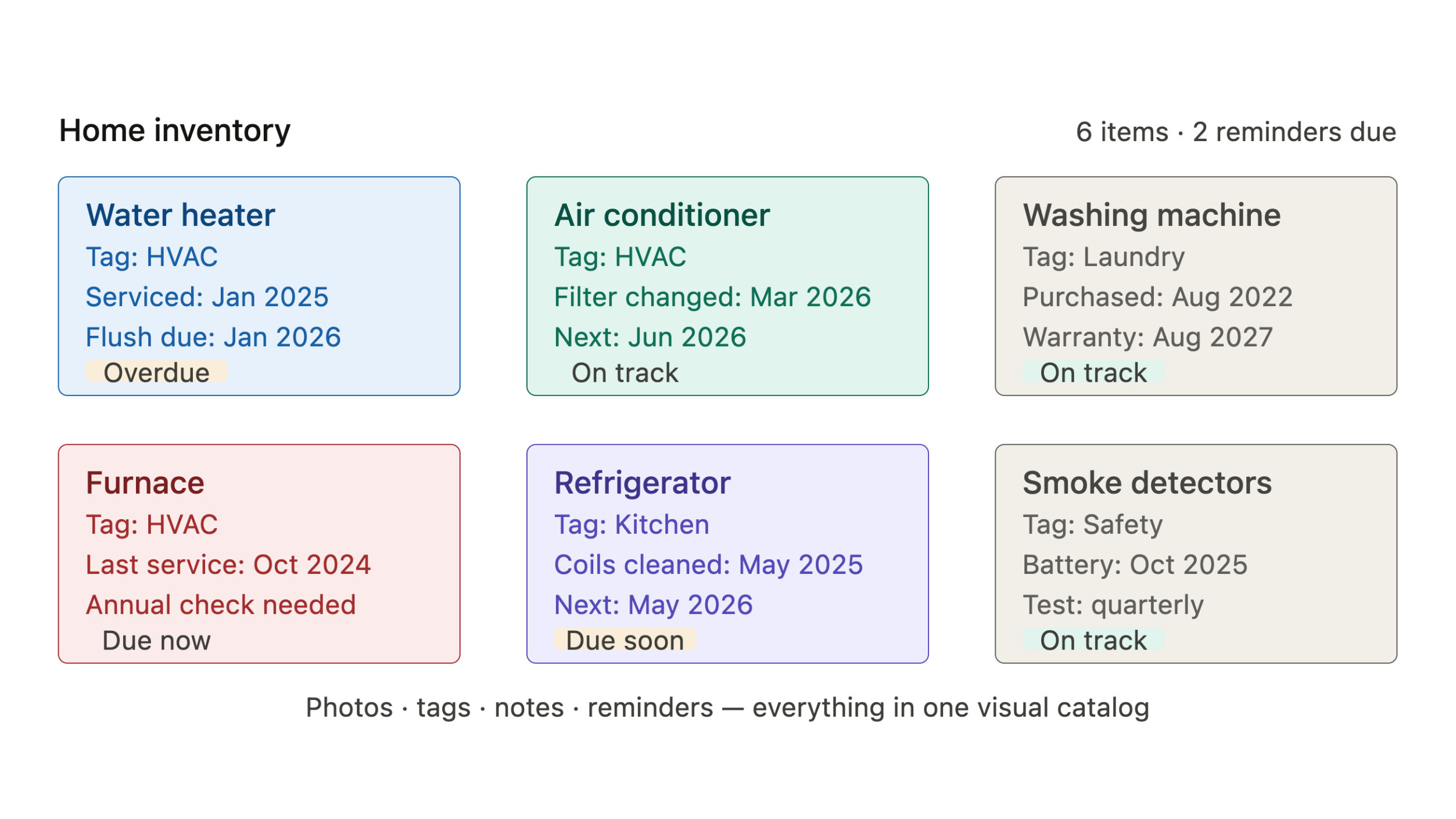
What makes Sortly genuinely useful is how quickly it turns chaos into structure. Within an hour, you can walk through your home, snap photos of key items like your water heater, washing machine, air conditioner, and even smaller tools, and build a complete visual catalog of your home.
Once everything is logged, you’re no longer guessing when something was last replaced or serviced—you can attach notes, warranty details, and even set reminders for future maintenance. It becomes less of a checklist app and more of a visual memory system for your entire home.
During testing, one of the most useful scenarios was insurance preparation. Instead of trying to remember everything you own during stressful situations, Sortly gives you a ready-made record that you can export or reference instantly.
Pros
Extremely easy visual inventory creation using photos
Flexible tagging system for organizing household items
Helpful for insurance documentation and asset tracking
Simple enough for beginners, powerful enough for long-term use
Cons
Not a dedicated maintenance automation tool (more inventory-focused)
Advanced features require paid plan
Pricing: Free tier + premium plans (approx. $99/year for family plan)
HomeZada is closer to a “home operations system” than a simple maintenance tracker. It is designed for homeowners who want to manage not just repairs, but the full lifecycle of their property.
This includes maintenance schedules, renovation planning, home inventory for insurance, and even financial tracking tied to home improvement projects.
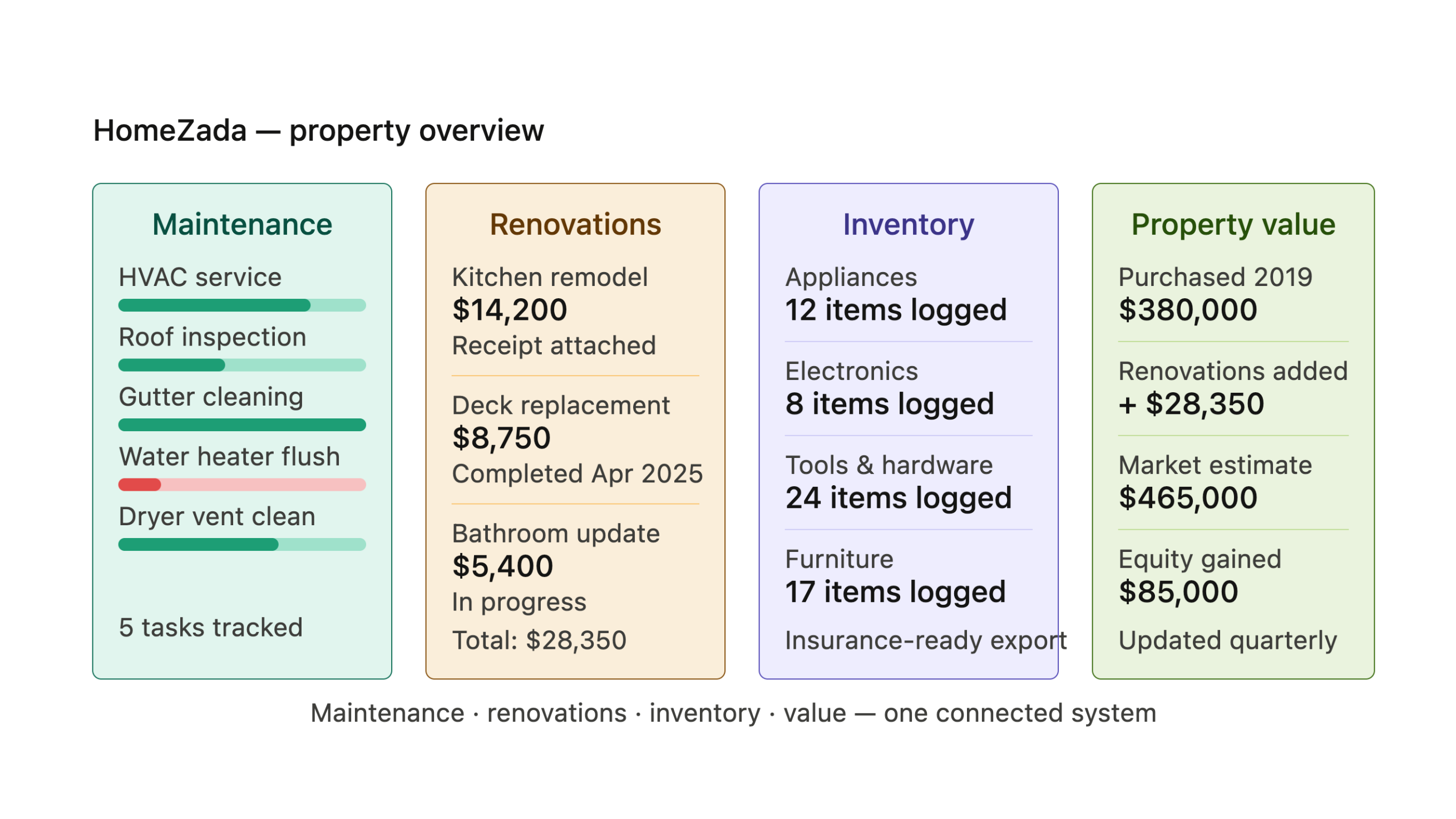
HomeZada shines when you treat your home like a long-term asset rather than a series of disconnected chores. For example, if you replace a water heater, you can log the cost, attach receipts, schedule future servicing, and connect it to your home’s overall value record.
During testing, the biggest advantage was visibility. Instead of wondering “when did we last do this?”, you get a structured timeline of everything that has happened to your home.
Pros
Full property management system (maintenance + finances + inventory)
Strong for insurance documentation and resale preparation
Great long-term planning dashboard
Highly structured and organized
Cons
Can feel overwhelming for casual users
Some features are more advanced than a typical homeowner needs
Many homeowners don’t just need reminders—they need actual help getting things fixed. That’s where Angi comes in.
Angi (formerly Angie’s List) is one of the most widely used platforms for finding vetted professionals for home repairs and maintenance.
Unlike tracking apps, Angi focuses on action. If your water heater breaks or you need HVAC servicing, you can quickly find local professionals, compare quotes, and book appointments directly.
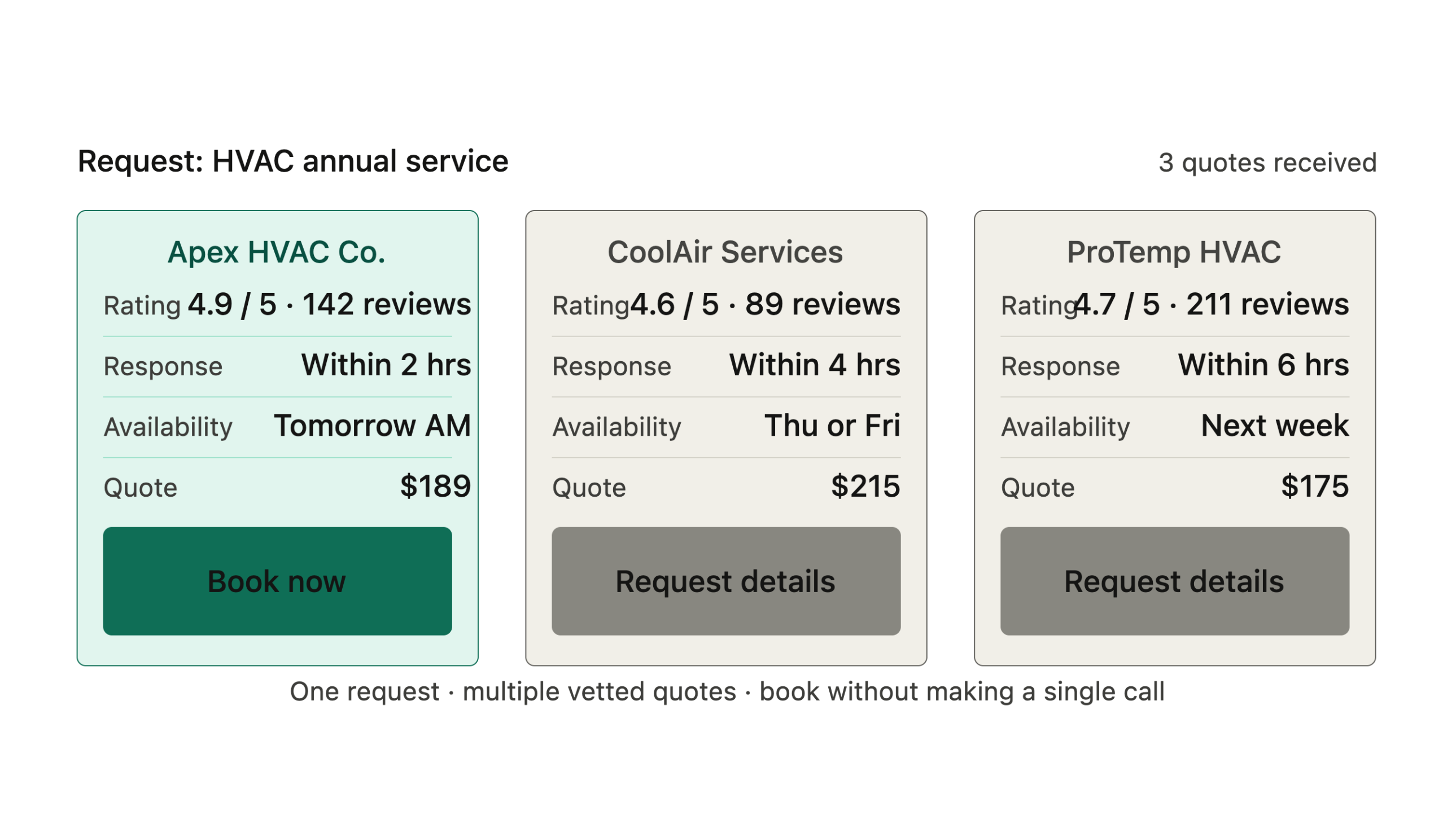
Angi fills an important gap: execution. Even the best maintenance tracker is useless if you don’t act on the reminders. Angi bridges that gap by making it easy to go from “I should fix this” to actually booking someone.
During testing, the biggest benefit was speed. Instead of calling multiple contractors, you can request multiple quotes in one place and compare them quickly.
Pros
Large network of vetted local professionals
Fast quote comparison
Useful for emergency and planned repairs
Covers wide range of home services
Cons
Pricing varies depending on contractors
Service quality can differ by region
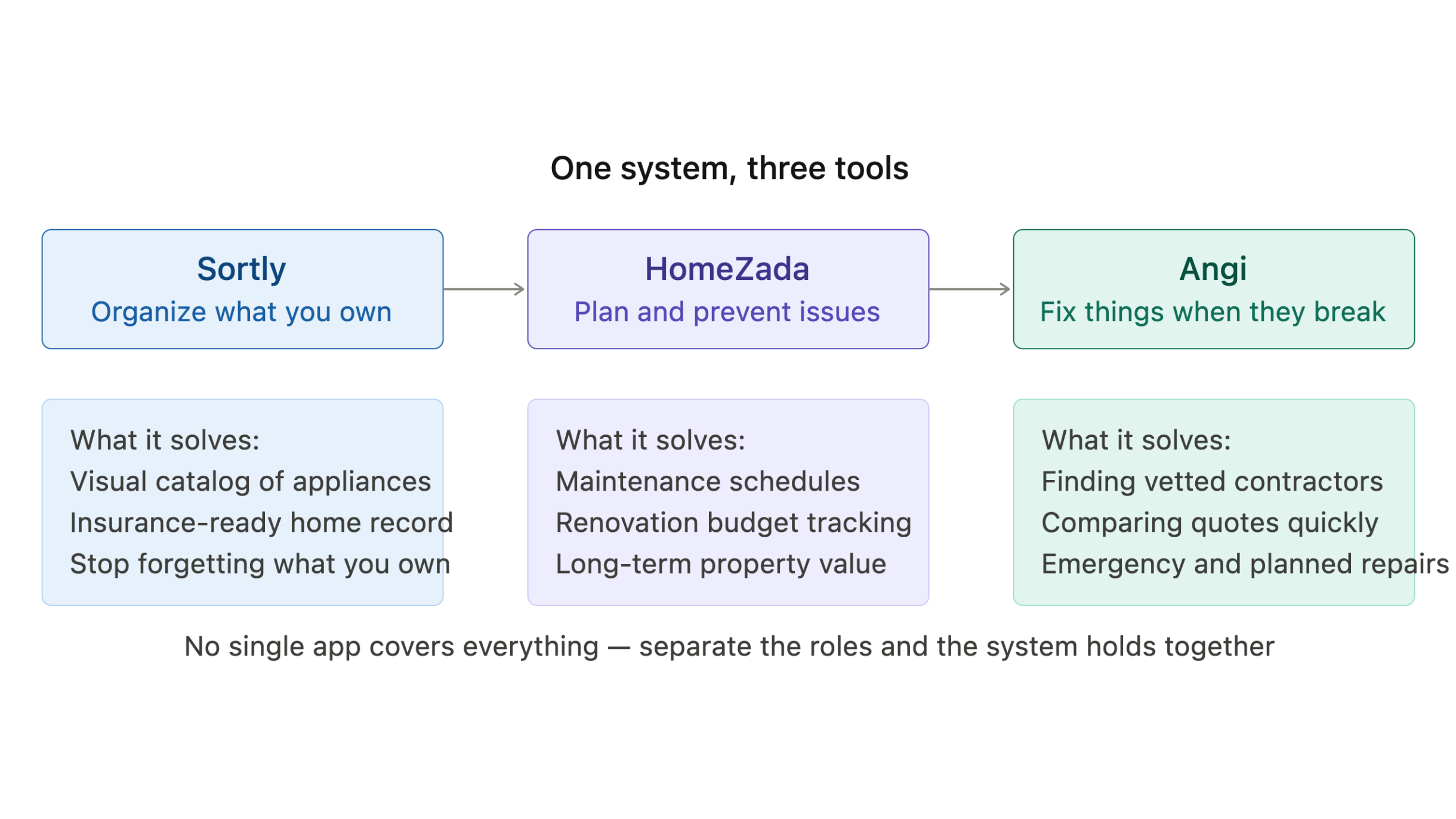
There’s no single “perfect” home maintenance app—what matters most is building a simple system that you’ll actually keep using over time. The best setup is usually a combination of organization, long-term planning, and real-world repair support.
If you want a simple and highly visual way to track what’s in your home, Sortly is the easiest entry point. While it’s not strictly a maintenance-only tool, it excels at helping you catalog appliances, tools, and household items using photos, tags, and folders. This makes it especially useful for homeowners who want to build a clear “home inventory” for insurance purposes or just stop forgetting what they own and when it was last serviced.
If you’re looking for a more complete, long-term home management system, HomeZada remains the strongest all-in-one option. It connects maintenance schedules with renovation projects, budgeting, and home value tracking, making it ideal for homeowners who want structure and long-term visibility rather than just reminders.
And when something actually breaks—or you need help fast—Angi is the most practical solution. Instead of searching endlessly for contractors or relying on word of mouth, it connects you with local professionals, lets you compare quotes, and helps you move quickly from problem to resolution.
In the end, the most effective approach in 2026 is not relying on a single app, but combining tools based on function: use one app to organize your home, another to plan and prevent issues, and a third to handle repairs when things go wrong. Once you separate those roles, home maintenance becomes far less stressful—and much more predictable.