
Decluttering always starts with good intentions. You open a closet, pull out a box of things you “might use someday,” and suddenly realize you’ve been storing half your life for a future that never arrives. The satisfying part isn’t just clearing space—it’s turning unused items into something useful again, whether that’s cash, credit, or simply peace of mind.
In 2026, reselling has become much more streamlined thanks to mobile marketplaces that handle everything from pricing suggestions to buyer messaging. But not all platforms are equally good at the same job. Some excel at quick local sales, others at shipping niche collectibles, and a few sit somewhere in between.
We reviewed the most widely used and still actively available apps on both iOS and Android, focusing on ease of listing, buyer quality, pricing transparency, safety, and how quickly items actually sell. Here are five platforms that consistently perform well depending on what you’re trying to clear out of your home.
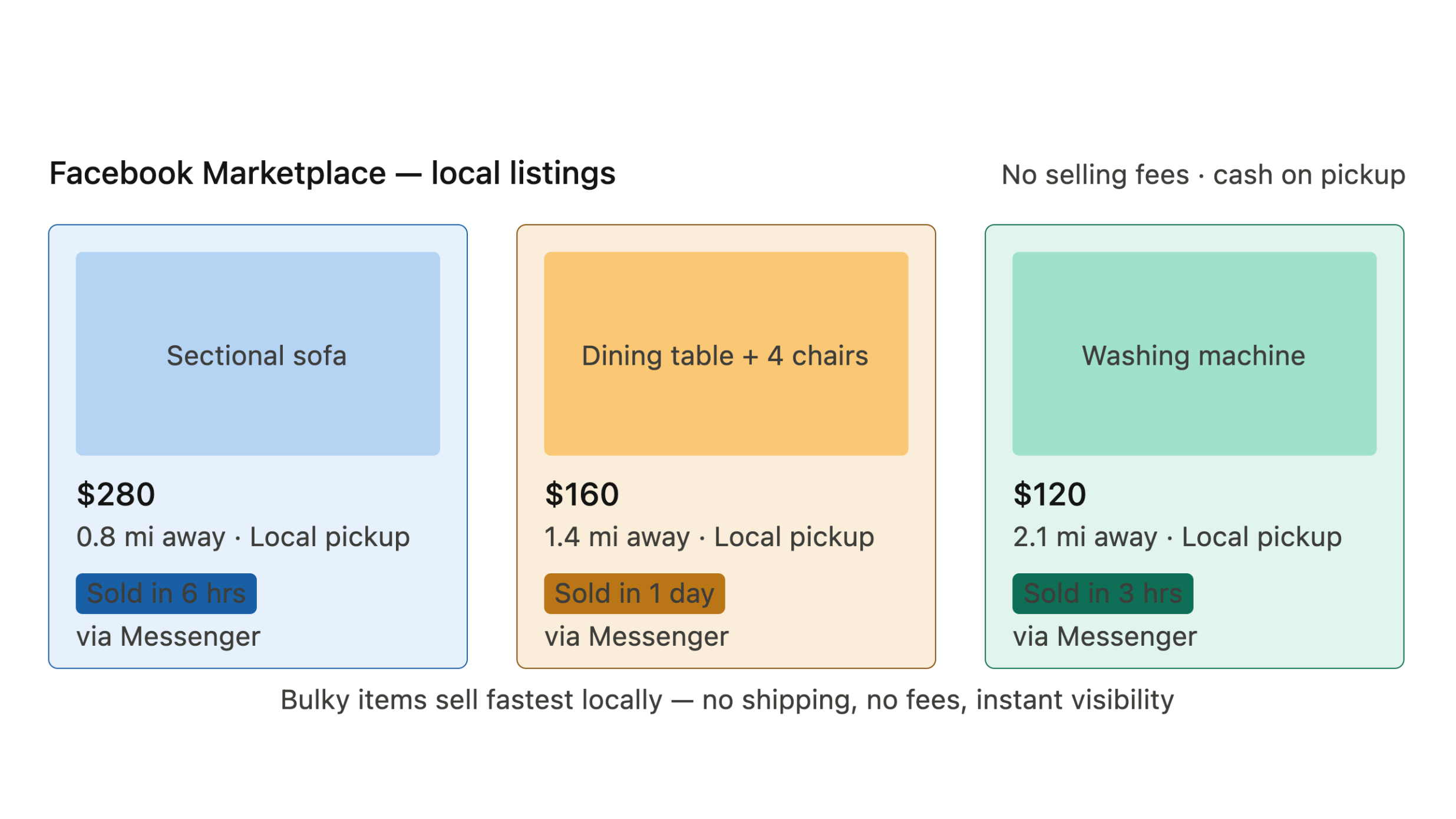
Facebook Marketplace is still the most effective tool for turning bulky household items into fast local cash. It works because it’s already embedded in a social network people use daily, which means your listings immediately get local visibility without extra effort.
The Reality Check:
What makes Facebook Marketplace powerful is not fancy features—it’s sheer reach. The listing process is minimal: upload a few photos, set a price, and you’re instantly visible to buyers in your area. In testing, large furniture pieces and appliances consistently sold faster here than on any dedicated resale app, mainly because buyers prefer local pickup and cash deals.
Pros:
No selling fees for most local transactions
Massive local user base increases visibility
Built-in Messenger simplifies negotiation
Ideal for bulky items like sofas, tables, and appliances
Cons:
No strong buyer verification system
Safety depends on user judgment during meetups
Interface can feel cluttered due to integration with Facebook
Best for: Quick local clearance of large household items
OfferUp is one of the most balanced resale platforms because it combines local selling with optional nationwide shipping. It’s designed to feel safer and more structured than older classifieds-style apps.
The Reality Check:
The platform’s key strength is its identity verification system (including optional TruYou profiles) and designated public meetup spots. These small details significantly improve trust between buyers and sellers, especially for mid- to high-value items like electronics or decor.
In practice, OfferUp works best when you want the convenience of Facebook Marketplace but with a slightly more controlled environment.
Pros:
Optional verified seller identity system
Built-in shipping option for non-local sales
Safer meetup infrastructure in many cities
Clean, mobile-first design
Cons:
Paid promotions often pushed for visibility
Shipping fees can reduce profit margins
Smaller audience than Facebook Marketplace in some regions
Best for: Safer local sales + occasional shipping flexibility
Mercari is built for speed. If Facebook Marketplace is a garage sale and eBay is an auction house, Mercari sits somewhere in between as a simplified, modern storefront.
The Reality Check:
The biggest advantage of Mercari is how fast you can list items. In testing, it typically takes under three minutes to upload photos, set a price, and publish a listing. That makes it especially effective for people decluttering multiple small or mid-value items like kitchenware, toys, or home accessories.
Mercari also removes a lot of friction by handling payments and shipping labels directly inside the platform.
Pros:
Extremely fast listing process
Simple flat-fee structure
Integrated shipping labels reduce hassle
Good for mid-range household goods
Cons:
Fees reduce final profit
Lower prices compared to auction-based platforms
Smaller buyer pool than eBay
Best for: Quick, low-effort selling of everyday household items
eBay remains the most powerful global resale marketplace, especially for items that are rare, collectible, or hard to price locally.
The Reality Check:
eBay’s biggest strength is its demand discovery system. When you list an item—or even scan a barcode—the platform can suggest pricing based on real historical sales data. This is especially useful for electronics, branded goods, vintage items, and anything with niche demand.
Unlike local apps, eBay gives your item access to a global audience, which often translates into higher final selling prices.
Pros:
Massive global buyer base
Strong pricing insights from historical data
Best platform for rare or collectible items
Auction format can increase final sale price
Cons:
Higher fees than local platforms
More complex listing process
Shipping and returns require more management
Best for: High-value, collectible, or niche items
Although Poshmark started as a fashion resale platform, it has expanded into lifestyle and home goods—especially small decor, kitchen accessories, and branded lifestyle items.
The Reality Check:
Poshmark’s strength is its social selling model. Instead of passive listings, items gain visibility through shares, parties, and community engagement. This creates faster movement for visually appealing products, particularly branded home decor, candles, glassware, and small kitchen goods.
However, it’s not designed for heavy or bulky items, which limits its use for full-house decluttering.
Pros:
Strong community-driven exposure
Simple flat-rate shipping system
Great for stylish, branded home items
Active buyer engagement increases visibility
Cons:
High commission fee compared to competitors
Not suitable for furniture or large items
Fashion-first audience limits some home categories
Best for: Small decor, lifestyle items, and branded household goods
There’s no single “best” resale app—it depends entirely on what you’re trying to sell and how much effort you want to put in.
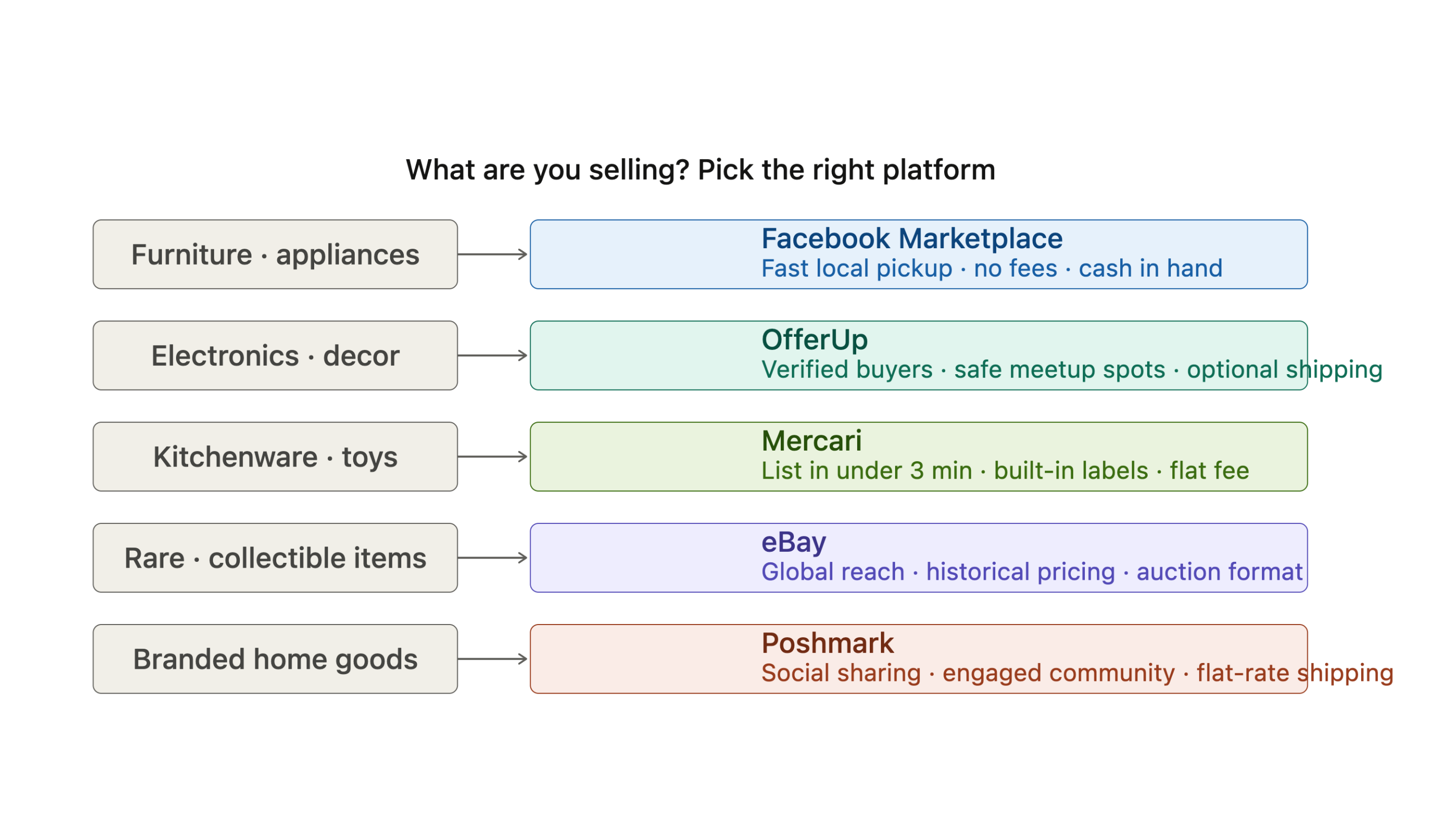
If your goal is speed and simplicity, Facebook Marketplace still dominates for local sales, especially bulky household items. It’s the fastest way to turn clutter into cash without dealing with shipping or fees.
If safety and structure matter more, OfferUp is a strong alternative that offers better trust features while still supporting local transactions.
For people who want a frictionless, almost “batch selling” experience, Mercari is ideal. It removes complexity and lets you move items quickly without much thinking.
When it comes to maximizing value—especially for rare, collectible, or branded goods—eBay remains unmatched due to its global reach and pricing intelligence.
And for smaller, aesthetic, or lifestyle-focused items, Poshmark performs well thanks to its highly engaged community.
A practical strategy many experienced sellers use is combining platforms: list bulky items locally first, then move smaller goods to shipping-based platforms if they don’t sell within a week.
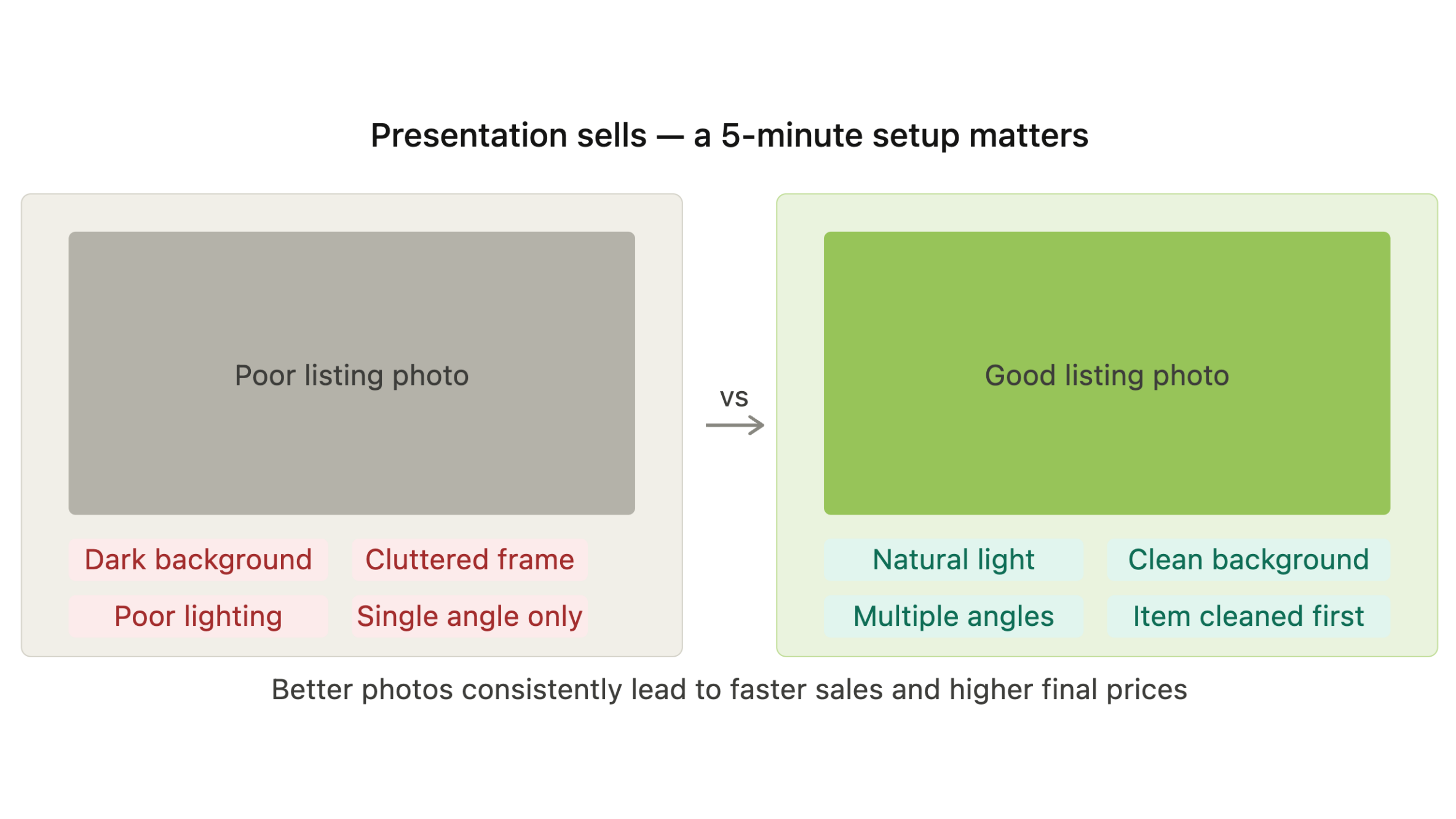
Presentation matters more than most people expect. Clean items, natural lighting, and uncluttered backgrounds consistently lead to faster sales and higher prices. A five-minute photo setup can easily increase your final profit more than any algorithm or pricing trick.